By Luan Gloria (CFC-GS/UFPA)
The conservation of the Negro River Basin, home to the world’s largest dark-water river, is crucial and extends beyond its traditional population. It receives strong support from international partnerships, which provide financial resources to ensure the environmental protection of this region. The Negro River originates in Colombia, where it is called the “Guiania River,” flows through Venezuela, and then enters Brazil via the state of Amazonas, passing through several Brazilian cities.
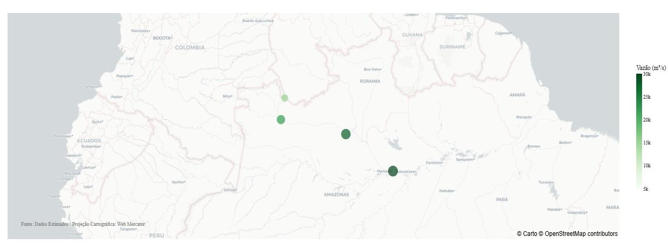
Figure 1: Distribution of Average Flow Along the Negro River.
Source: developed by the author (2026).
The Negro River Basin, as illustrated in Figure 1, is notable for its vast water capacity, with a flow rate of up to 30,000 cubic meters in Manaus (AM). This region is of great importance, characterized by its abundance of natural resources and biodiversity; it is home to traditional communities and holds significant potential as an asset for global environmental conservation. Recognizing this, the Austrian Climate Alliance Project, based in Austria, has been active in the Amazon River region since 1993, with ideological, political, and financial support, as the institution itself notes.
The institutional partnership between Austria and Brazil, involving non-governmental organizations, establishes a direct link between the Austrian Climate Alliance and the Federation of Indigenous Organizations of the Negro River (FOIRN). FOIRN acts as an umbrella organization, encompassing various interest groups in the Negro River region. These groups include women, youth, artisans, farmers, and workers—all crucial elements for the region’s economic and social dynamics. FOIRN’s headquarters is located in São Gabriel da Cachoeira, in Amazonas, Brazil.
The preservation of the Negro River Basin is crucial for regulating the global climate and the rainfall cycle in South America, as it functions as a major carbon sink. Climate finance is essential for keeping the forest standing, supporting traditional and indigenous communities as guardians of the biome. International resources, such as Austrian support, are vital for fostering bioeconomies and strengthening territorial surveillance. Without this structured financial support, the basin’s climate resilience and future environmental balance are threatened; with this in mind, the importance of financing is reflected in the amount invested in recent years by the Alliance project.
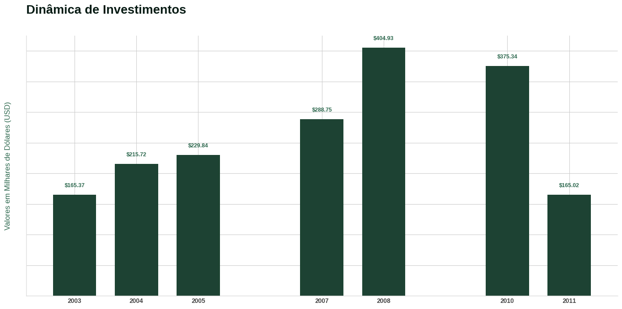
Figure 2: Chart showing investment trends.
Source: compiled based on data from the CFC-GS Tracker (2026).
When analyzing the trend in financial investments directed toward the region, as detailed in the figure above, we observe a consistent upward trend during the first decade of the 2000s. The volume of funds, measured in thousands of dollars, jumped from approximately $165,370 in 2003 to a peak of $404,930 in 2008, possibly reflecting a phase of intensified conservation projects and recognition of the climate emergency by international funders, such as the Climate Alliance Austria.
Although 2010 and 2011 show high levels (around $375 and $165, respectively), the fluctuation in figures—especially the decline in the final year of the analyzed period—raises a red flag regarding the need to ensure the sustainability and predictability of this capital flow. This financial stability is crucial for organizations like FOIRN to be able to structure long-term programs that ensure the socio-environmental protection of the basin and the climate resilience of the entire Amazon biome.
In short, the Negro River Basin is a crucial foundation for global climate balance. Environmental preservation in this region is intrinsically linked to its financial sustainability and the strengthening of local social networks. The investment history reveals inconsistencies in funding, with peaks in international contributions followed by fluctuations, which poses a constant challenge for long-term land management. Thus, the continued collaboration between the Climate Alliance Austria and FOIRN goes beyond a mere institutional partnership. It establishes itself as an essential strategy to ensure the ongoing protection of the region’s ecosystem services, securing a resilient future not only for traditional communities but also for climate regulation on a global scale.
You can read more articles about climate finance on our blog and access financing data on our tracker. Check it out!
REFERENCES
FOIRN – Federação das Organizações Indígenas do Rio Negro. In: KLIMA BÜNDNIS ÖSTERREICH. [S. l.]: [s. n.], [20–]. Disponível em: https://www.klimabuendnis.at/oesterreich/klimagerechtigkeit/rio-negro-kennenler-nen/foirn/. Acesso em: 15 mar. 2026.
FEDERAÇÃO DAS ORGANIZAÇÕES INDÍGENAS DO RIO NEGRO. Portal FOIRN. São Gabriel da Cachoeira, AM, 2026. Disponível em: https://foirn.org.br/. Acesso em: 16 mar. 2026.